
tower defense games with unique mechanics are the antidote to that familiar problem: you place a few towers, upgrade on autopilot, and the rest feels like waiting for the wave timer to end. If you love the genre but feel numb to the usual “build, upgrade, repeat,” you’re not alone.
The good news is that modern TD design has gotten weird in a good way, with games that treat “tower” as a flexible idea and “defense” as more than a funnel-shaped maze. Some focus on positioning puzzles, some turn your units into active abilities, and some mix in roguelite runs so every attempt forces new decisions.
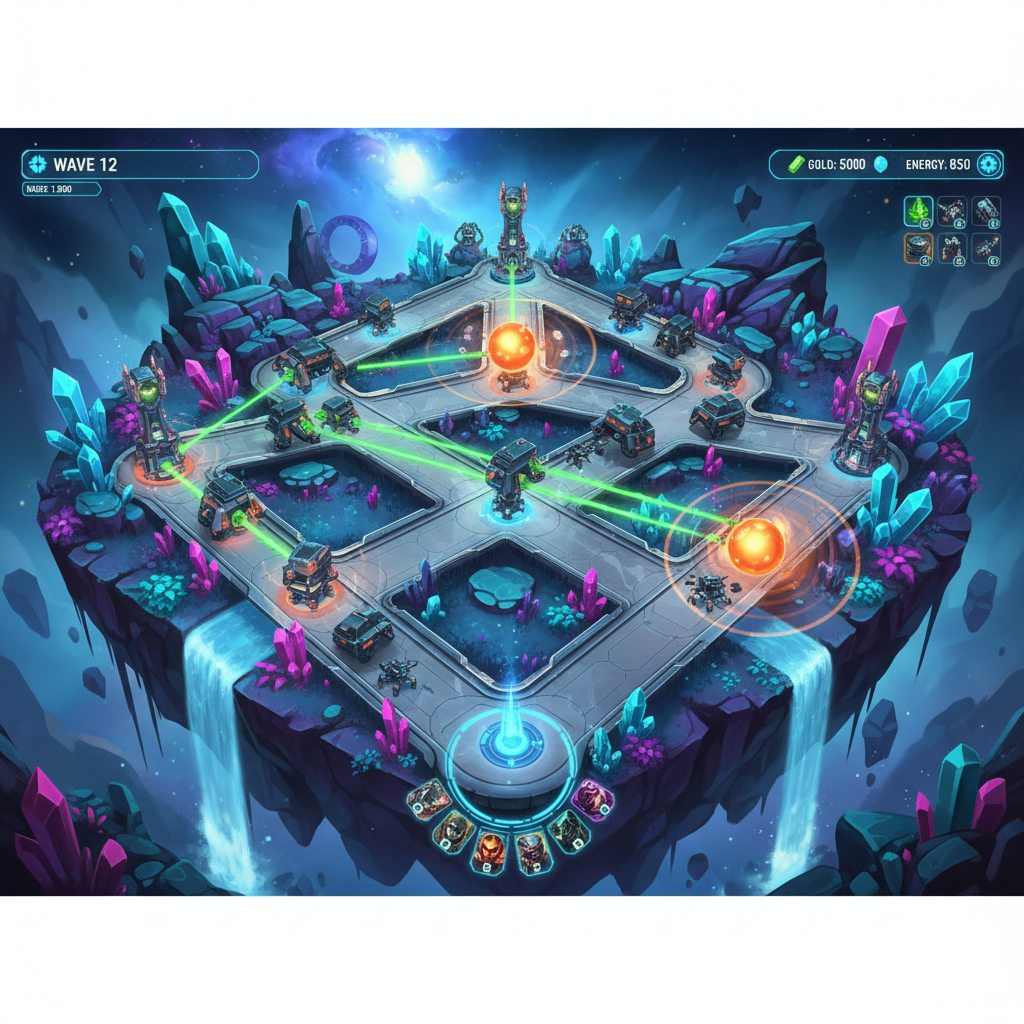
This guide breaks down what “unique mechanics” usually means in practice, how to recognize which style fits you, and what to try if you want novelty without sacrificing the satisfying strategy core. You’ll also get a quick comparison table, a self-check list, and a few practical tips that help these systems click faster.
What “unique mechanics” really means in tower defense
In this genre, “unique” is less about quirky visuals and more about where the meaningful decisions happen. Traditional TD concentrates decisions in build order and choke-point shaping; newer games spread decisions across time, positioning, unit synergy, and even the map itself.
- Non-standard towers: towers that move, merge, rotate, or change roles based on adjacency.
- Active play: you aim skills, reposition units, or manage cooldowns instead of just watching.
- Lane rules change: enemies split, swap lanes, ignore mazes, or punish static setups.
- Meta progression and draft: roguelite relics, card picks, or randomized loadouts that reshape each run.
- Economy twists: income comes from risk-taking, combo chains, or controlled leaks instead of passive interest.
When people search for tower defense games with unique mechanics, they’re usually asking for a game where the same “good habit” doesn’t solve every map. That’s the real test.
Common design patterns that feel fresh (and why they work)
Most standout TD titles reuse a few proven patterns, then push them far enough that you notice. If you know these patterns, you can predict whether a game will feel like “just another TD” or something you’ll obsess over.
1) Positioning puzzles instead of pure DPS math
These games make placement itself the main puzzle: towers interact with terrain, face directions, or rely on line-of-sight. The fun comes from finding layouts, not only stacking upgrades.
2) Synergy-first builds (combos beat raw power)
Here, individual towers are intentionally incomplete, and power comes from pairing effects: slows into crit windows, armor shred into burst, pulls into AoE, and so on. You feel smart because you created a machine, not because you bought the biggest number.
3) Controlled chaos via drafting or roguelite choices
Roguelite TD doesn’t just randomize for variety, it forces tradeoffs. A strong relic might lock you into short range, or a bonus might reward letting a few enemies slip by. The “right” answer changes run to run.
4) You are part of the defense
Some of the most memorable tower defense games with unique mechanics give the player an avatar, spells, or tactical tools that matter every wave. It can reduce the “spectator” feeling, but it also raises the skill ceiling.
Quick comparison table: unique mechanics by what they change
If you’re choosing what to play next, it helps to sort games by which part of the loop gets reinvented. Use this table as a fast filter.
| Mechanic focus | What changes | Feels best for players who… | Watch out if you dislike… |
|---|---|---|---|
| Placement/terrain rules | Board geometry becomes the puzzle | Like planning and replaying maps | Trial-and-error layout testing |
| Synergy and chaining | Combos matter more than single towers | Enjoy theorycrafting and “engine building” | Reading tooltips, build experimentation |
| Active abilities / hero control | You aim, time, and react mid-wave | Want higher APM and clutch saves | Missing timing windows, multitasking |
| Roguelite draft & meta | Each run offers different tools | Prefer variety and “one more run” loops | RNG, imperfect runs, adapting fast |
| Economy and risk | Income tied to risky choices | Like pushing greed without collapsing | Punishing snowball failures |
Self-check: what kind of “unique” do you actually want?
A lot of disappointment comes from picking novelty that clashes with your habits. Try this quick check and be honest, it saves time.
- If you replay maps for perfect clears, look for placement puzzles and deterministic rules.
- If you love experimenting, prioritize synergy-heavy systems where weak parts become strong together.
- If you get bored between waves, consider active heroes, manual skills, or “micro” tools.
- If you like variety more than mastery, roguelite drafts keep the loop fresh.
- If you enjoy pressure, economy twists and risk-reward income can be addictive.
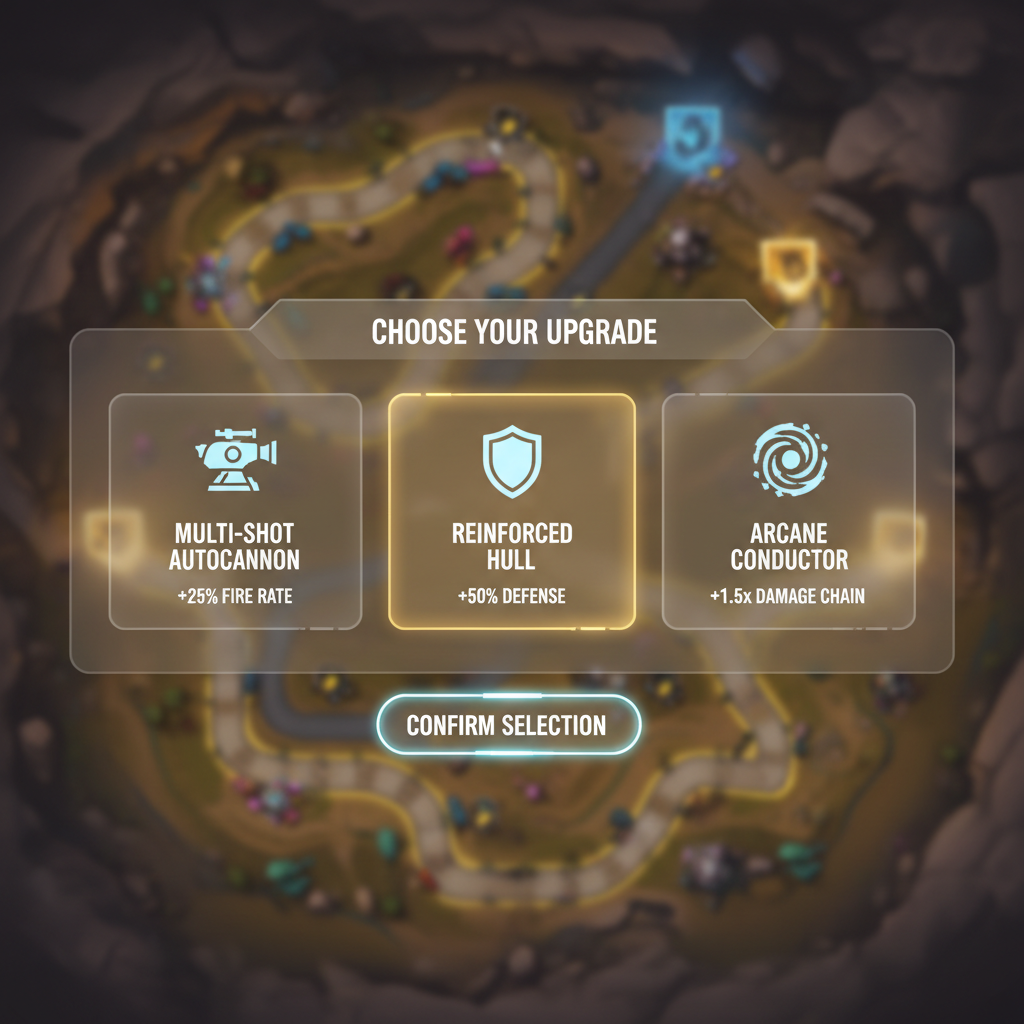
Also, notice what you call “unfair.” If you hate surprise immunities or sudden lane switches, you might want innovation that stays transparent, not innovation that hides rules until you lose.
Practical ways to approach complex mechanics (without bouncing off)
Some tower defense games with unique mechanics feel “bad” for the first hour because you try to play them like classic TD. A few small adjustments usually fix that.
Start by learning the win condition, not the tower list
On unusual maps, the win condition may be “stall long enough,” “protect multiple points,” or “manage leaks for cash.” Read the objective and check how failure triggers, then decide what to build.
Build for information early
Early waves are often cheap scouting. Place a flexible utility option first, a slow, a reveal, a push, something that teaches you how enemies behave, then commit to damage.
Play for a stable midgame before chasing the ‘cool’ combo
People lose while trying to force the signature mechanic too early. If the game supports crazy synergies, assume you earn them after you stop bleeding lives and stabilize income.
When drafting, pick for consistency unless you already know the pool
In roguelite TD, “high ceiling” picks look tempting, but they can brick your run if you never see supporting pieces. Early on, choose tools that work alone, then pivot when the draft offers a clear direction.
- Safe early picks: broad slows, armor shred, splash damage, economy that doesn’t require leaks.
- Risky early picks: niche damage types, towers that need adjacency, builds that require specific relics.
Recommended gameplay features to look for (so your next pick is a hit)
This isn’t a list of specific game titles because availability and platform libraries shift, but these features are reliable signals that a TD game won’t feel cookie-cutter.
- Enemy design that teaches: clear telegraphs for shields, stealth, lane swaps, or speed bursts.
- Meaningful terrain: elevation, choke nodes, directional towers, or build limits that create real puzzles.
- Multiple valid archetypes: not just “spam the best tower,” but distinct paths like stall-control, burst, or DOT.
- Fail states you can diagnose: post-wave breakdowns, damage type info, or replay tools.
- Run modifiers: mutators, contracts, or challenge modes that remix the same content.
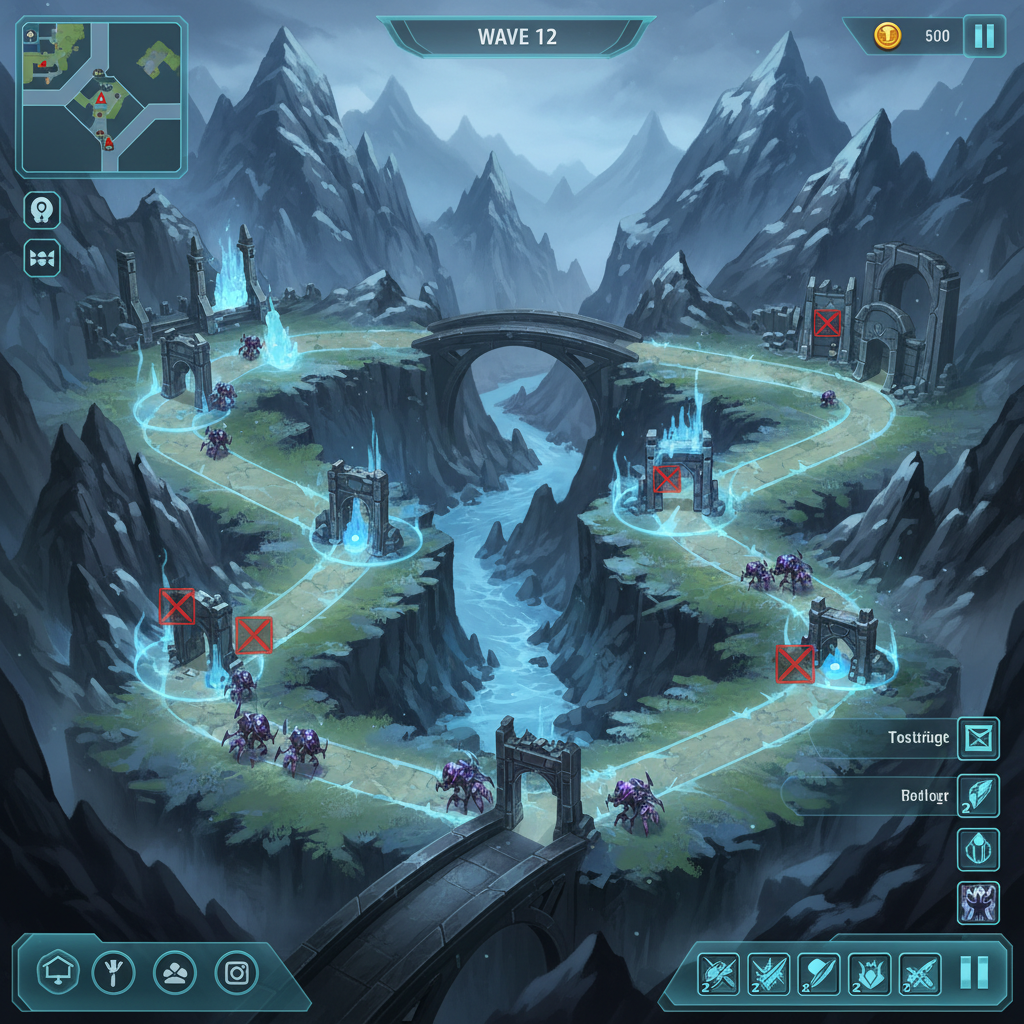
One more subtle sign: good tooltips. Unique systems live or die by clarity. If a game explains stacking rules, targeting priorities, and status interactions well, you spend time strategizing instead of arguing with the UI.
Common mistakes that make “unique mechanics” feel frustrating
Fresh mechanics can backfire when you bring old habits. These are the patterns that usually cause the “this game is cheap” reaction.
- Overbuilding damage, ignoring control: many modern designs punish pure DPS if enemies have shields, regen, or rush phases.
- Upgrading too early: in some systems, spreading small coverage beats one expensive tower.
- Forcing one archetype: synergy games often want you to flex based on what the map and waves demand.
- Misreading targeting rules: “first,” “strong,” “closest,” and “random” targeting can make or break a plan.
- Skipping economy: if income is interactive, playing too safe can be a slow loss.
According to the Federal Trade Commission (FTC), in-app purchases and monetization disclosures matter for consumer clarity, so if you’re picking a mobile TD, it’s smart to check how upgrades, timers, and purchases are presented before you commit serious time.
Key takeaways and what to do next
If you want tower defense games with unique mechanics, aim for games that move decisions away from “buy more towers” and toward placement rules, synergy engines, active tools, or run-to-run drafting. The fastest way to pick well is to match the innovation style to what you already enjoy: puzzle-like planning, reactive micro, or roguelite variety.
Action-wise, choose one mechanic focus from the table, then give any candidate game a short “learning run” where you test enemy rules and targeting before you chase flashy combos. You’ll feel the difference quickly, usually within the first few maps.
FAQ
What counts as “unique mechanics” in tower defense games?
Usually it means the core decisions aren’t just tower upgrades. Think terrain rules, towers that transform or combine, active skills you must time, or roguelite drafts that reshape your build every run.
Are tower defense games with unique mechanics harder than classic TD?
Often yes at the start, mainly because your old habits don’t transfer cleanly. Once you learn the rule set, many of these games become more readable than they first appear.
How do I avoid wasting time on a TD game that’s “unique” but not fun?
Watch for clarity: do enemies telegraph abilities, do tooltips explain stacking, do you understand why you lost a wave. If the game hides rules, novelty can feel like randomness.
Do roguelite tower defense games rely too much on RNG?
It depends on the draft design. Better ones give enough consistent tools that skill still drives outcomes, while still forcing adaptation. If runs die because you never see a basic need like anti-armor, that can feel rough.
What mechanics help with replayability the most?
Drafting systems, rotating modifiers, and multiple viable archetypes tend to keep maps fresh. Purely cosmetic variety rarely does, even if the art is great.
Is active hero control required to enjoy modern TD design?
No, plenty of innovative games stay mostly “hands-off” and focus on placement or synergy. Active control is great if you like clutch moments, but it can be tiring if you want a calmer pace.
How can I learn complex synergy systems faster?
Limit your variables: pick a small set of towers and learn how two statuses interact, then expand. If the game has a sandbox or challenge mode, use it to test targeting and stacking rules.
If you’re currently bouncing between games because they all feel the same, pick one “novelty lane” (placement puzzle, synergy engine, active micro, or roguelite draft) and search within that lane, it narrows choices and usually gets you to a satisfying match faster.