
top games with parkour and wall running usually share one thing: movement feels like the main “weapon,” not just a way to get from A to B. If you’ve bounced off a few games because wall runs felt stiff, momentum kept dying, or the camera fought you, this list aims to save you that frustration.
Parkour-heavy games can be wildly different, some lean into precision platforming, some blend shooting with traversal, and others make you read the environment like a puzzle. The trick is picking the right flavor for how you actually play, not how a trailer makes it look.

Below you’ll get a curated set of games (with quick-fit guidance), a comparison table, practical settings and control tips, plus a short checklist to help you decide what to play next without overthinking it.
What “parkour & wall running” really means in games
Not every game that includes a wall run delivers the same feel. Some titles treat it as a situational move on highlighted surfaces, others build an entire movement sandbox where speed, angles, and timing matter.
- Momentum-based traversal: chaining moves preserves speed, messing up costs you speed and sometimes health.
- Surface rules: “run anywhere” systems feel freer, while “run on marked walls” systems feel more guided but often more readable.
- Camera + FOV comfort: first-person parkour lives or dies by camera stability and field-of-view settings.
- Combat integration: some games reward staying mobile in fights, others separate combat arenas from traversal routes.
According to the ESRB, content ratings and descriptors can vary significantly even within the same genre, so it’s worth checking the rating if you’re buying for younger players or streaming for mixed audiences.
Quick comparison: which game fits your vibe
Here’s a practical snapshot. Think of it like a shortcut before you dive into store pages and spoiler-heavy videos.
| Game | Perspective | Wall Running Feel | Best For | Notes |
|---|---|---|---|---|
| Mirror’s Edge / Catalyst | First-person | Flow + precision | Pure parkour fans | Iconic routes, timing matters |
| Titanfall 2 | First-person | Fast, combat-synced | FPS players who love movement | Campaign is a standout |
| Dying Light 1/2 | First-person | Parkour with stakes | Open-world exploration | Night changes risk level |
| Ghostrunner | First-person | High-speed, lethal | Challenge seekers | One-hit deaths common |
| Warframe | Third-person | Acrobatic mobility | Co-op progression | Movement is a core skill |
| Assassin’s Creed (varies) | Third-person | Climb + freerun | Stealth + sightseeing | Not “wall running,” more traversal |
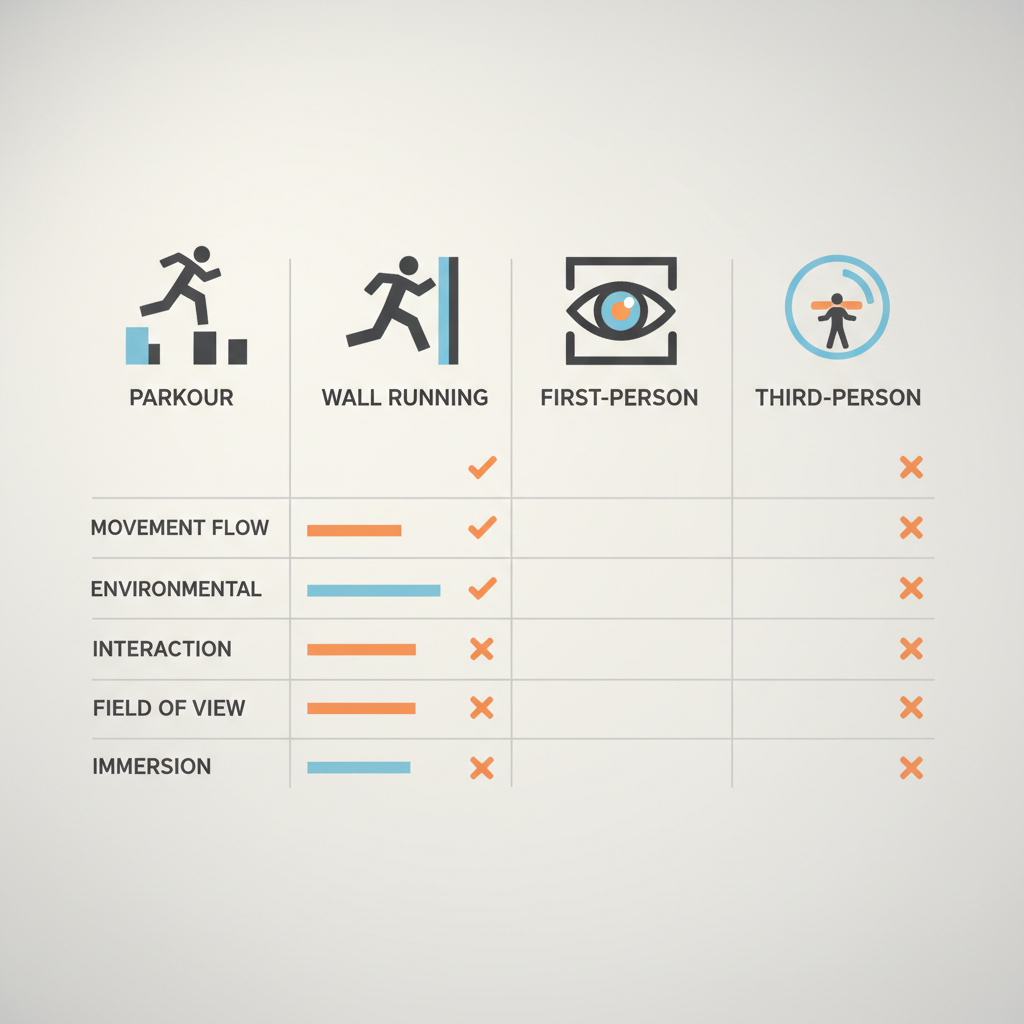
Key takeaway: if you want “movement as the point,” start with Mirror’s Edge or Ghostrunner. If you want “movement plus shooting,” Titanfall 2 tends to land better.
The top picks: games that nail parkour and wall running
Mirror’s Edge (and Mirror’s Edge Catalyst)
These are still the reference point for many people searching for top games with parkour and wall running, because the design keeps pushing you to stay smooth. You’re rewarded for reading the environment quickly, committing to a line, and not hesitating mid-jump.
- Why it works: clean readability, strong sense of speed, movement feels “hands-on.”
- Who it’s for: players who replay routes to improve times.
Titanfall 2
Titanfall 2 makes wall running feel practical, not decorative. It’s fast, forgiving enough to learn, and the campaign teaches movement in a way that rarely feels like a tutorial box telling you what to do.
- Why it works: wall runs connect naturally to slides, jumps, and combat positioning.
- Who it’s for: FPS players who want traversal to matter in fights.
Dying Light (1 and 2)
Dying Light is parkour with pressure. Even when you’re “just moving,” the world can punish sloppy routes, especially if you take risks at the wrong time of day. That tension makes traversal feel meaningful, not like filler.
- Why it works: vertical exploration plus real consequences for mistakes.
- Who it’s for: open-world fans who want movement to be a survival tool.
Ghostrunner
Ghostrunner is where a lot of people discover they love movement games but hate spongey combat. It’s sharp, fast, and often punishing. When it clicks, it’s hard to put down; when it doesn’t, it can feel like hitting a wall for an hour.
- Why it works: speed + precision, wall running as part of combat rhythm.
- Who it’s for: players who enjoy repetition and mastery.
Warframe
Warframe’s movement is more “acrobatic mobility” than classic wall-running platforming, but the wall latches, bullet jumps, and fast traversal loops scratch the same itch for many players. It’s also one of the better options if you want co-op plus constant motion.
- Why it works: movement scales with skill, lots of room to express style.
- Who it’s for: co-op grinders who want to feel agile, not stuck in cover.
A fast self-check: which type of movement game should you buy?
If you’re staring at store pages and everything looks “parkour-ish,” use this quick filter. It’s not scientific, but it prevents impulse buys you regret after 40 minutes.
- You want pure flow (minimal looting, minimal menus) → Mirror’s Edge, Ghostrunner.
- You want parkour as combat advantage → Titanfall 2, some arena shooters with strong mobility.
- You want open-world traversal where movement unlocks exploration → Dying Light.
- You want co-op and long-term progression → Warframe.
Another honest question: do you enjoy restarting a section to improve a run, or does that annoy you? If restarts irritate you, avoid the most punishing “one mistake resets everything” games, even if they look cool.
Practical tips to make wall running feel better (settings + technique)
A surprising amount of “this game feels bad” is fixable in 10 minutes. Not always, but often enough that it’s worth trying before you uninstall.
Settings that typically help
- Increase FOV if available, it can reduce the cramped feeling during runs.
- Turn down motion blur if you get visual fatigue or lose track of ledges.
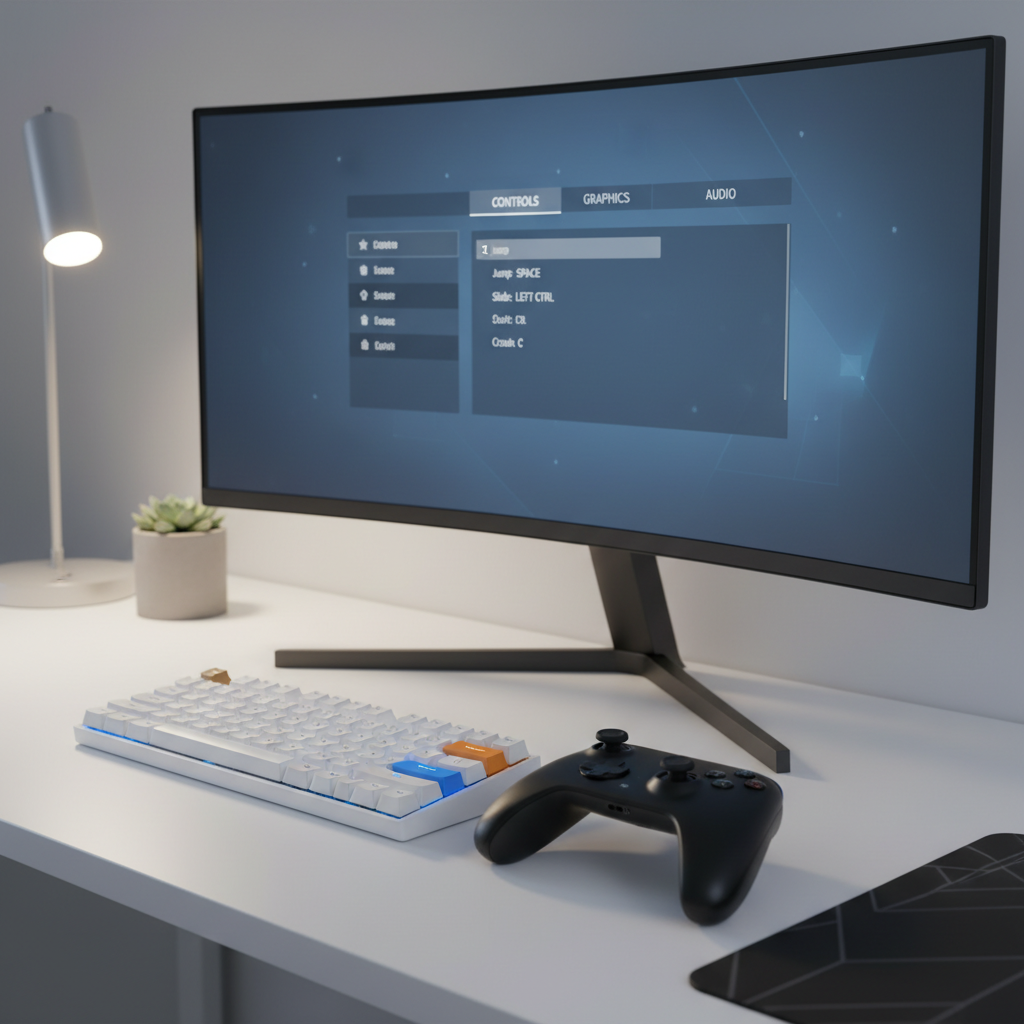
- Remap jump/slide to buttons you can hit without moving your thumb off aim.
- Sensitivity tuning: raise it slightly if you keep missing wall angles, but avoid going so high you overcorrect.
Technique cues that translate across games
- Commit to the line: hesitating mid-approach kills momentum more than a slightly imperfect angle.
- Look where you’ll land a beat earlier than you think, many systems “assist” when your camera leads.
- Chain two moves on purpose: run → jump → slide, or wall run → jump → ledge grab, simple combos build consistency.
According to Xbox Support, adjusting display and controller settings can meaningfully change comfort and performance, especially in fast first-person games where motion clarity matters.
Common mistakes (and how to avoid wasting time)
- Buying for “wall running” alone: some games advertise it, but it’s a minor traversal option you use twice per level.
- Ignoring difficulty signals: Ghostrunner-like titles can be amazing, but if you hate repeated failure loops, pick a more forgiving game.
- Forgetting platform differences: framerate and input feel can vary by console/PC, and movement-heavy games expose that quickly.
- Assuming you “should” like first-person parkour: some players simply prefer third-person readability, and that’s fine.
If you’re sensitive to motion sickness, strong camera bob and rapid FOV changes may trigger discomfort. In that situation, lowering motion effects and taking breaks is sensible, and if symptoms persist, it’s reasonable to consult a healthcare professional.
Conclusion: pick one game, then learn its movement language
If you’re hunting for top games with parkour and wall running, the best results come from matching the game’s movement “rules” to your personality. Mirror’s Edge rewards flow, Titanfall 2 rewards aggressive mobility, Dying Light rewards smart routing under pressure, Ghostrunner rewards precision, and Warframe rewards long-term movement mastery.
- Action step 1: choose one title from the table that fits your tolerance for challenge and your preferred perspective.
- Action step 2: spend 15 minutes on settings and basic chaining before you judge the feel.
If you try one and it still feels off, that’s not a failure, it usually just means you picked the wrong movement “type” for how you like to play.
FAQ
What are the best top games with parkour and wall running for beginners?
Titanfall 2 is often a friendly starting point because movement is powerful but not overly punishing. Mirror’s Edge can also work if you enjoy practicing routes without heavy combat pressure.
Is Mirror’s Edge still worth playing today for wall running?
Usually yes, especially if you care about flow and readability. It can feel different from newer titles, but the movement design remains a benchmark for first-person parkour.
Which game has the fastest wall running with shooting?
Titanfall 2 tends to deliver the clearest “run, wall-run, shoot, reposition” loop. A lot of other shooters have mobility, but fewer make wall running feel central minute to minute.
Are there good open-world options with parkour?
Dying Light stands out because traversal is tied to exploration and risk. It’s less about perfect time-trial lines, more about making smart choices across rooftops.
What if wall running makes me feel dizzy or nauseous?
Try raising FOV, reducing motion blur, and disabling camera bob if the game allows it. If you still feel unwell, take breaks and consider asking a healthcare professional, since motion sensitivity varies a lot by person.
Do third-person games count for “parkour and wall running” lists?
They can, but the feel differs. Third-person freerunning often emphasizes animation and route choice over the “hands-on” first-person timing, so it depends on what you mean by parkour.
How do I get better at chaining wall runs?
Pick one short route and repeat it until you stop thinking about buttons. Most players improve fastest by practicing a tiny sequence, then adding one move at a time.
If you’re deciding between two or three options, a good shortcut is to watch a couple minutes of raw gameplay focused on traversal, not cutscenes, then pick the one where movement looks readable to you. That single step usually beats chasing whatever is trending.