
Best upcoming vr games 2026 is a phrase that sounds simple, but most lists turn into hype, vague release windows, and trailers that don’t tell you what it actually feels like to play.
If you’re trying to plan what to buy next year, or even whether you should upgrade your headset or PC, you need a tighter way to judge what’s worth watching and what’s just marketing momentum.
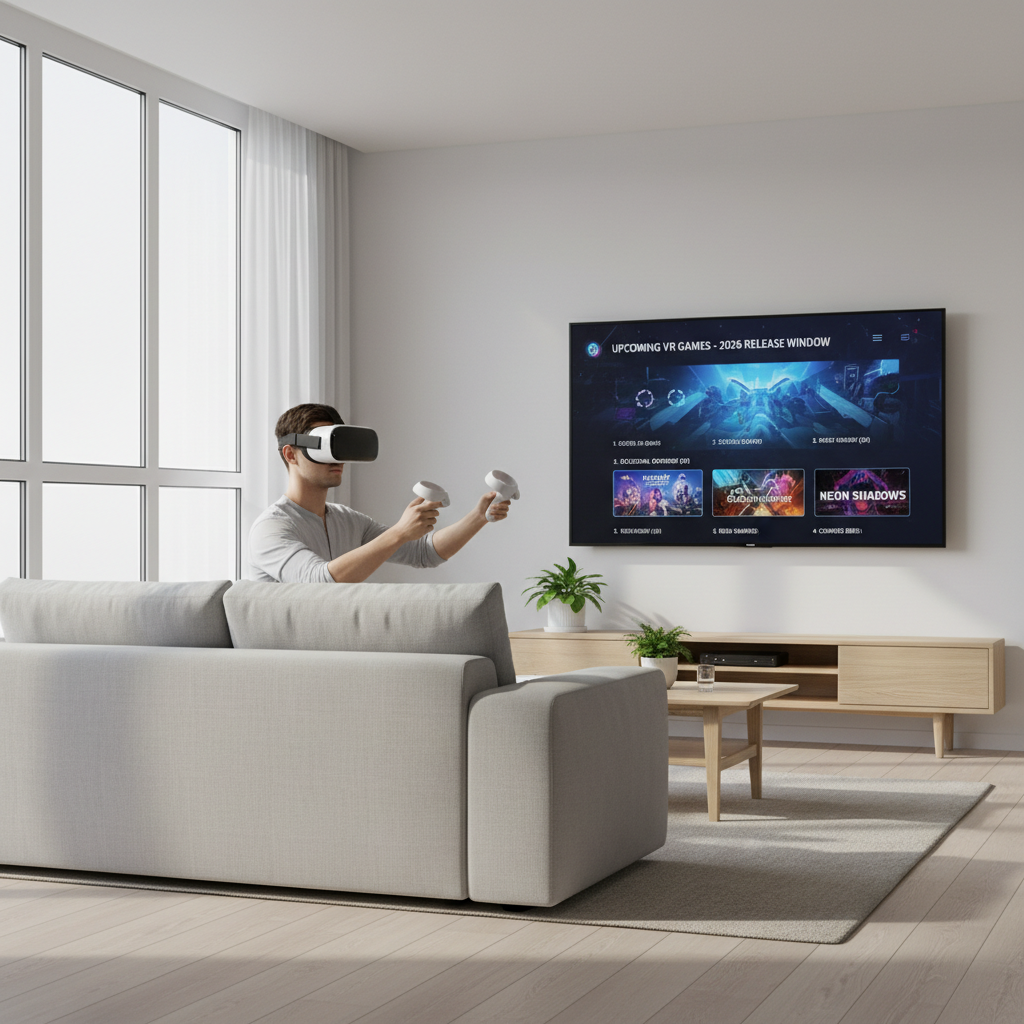
This guide is built for that reality, how to read “coming 2026” announcements, which genres tend to deliver in VR, and what to track so you’re ready when release dates finally lock.
What “upcoming” really means in VR for 2026
VR development timelines can be messy, and “2026” often signals intent rather than a guaranteed ship date. Many studios announce early to recruit, attract publishing support, or build wishlists, and that’s not automatically a bad sign, it just changes how you should interpret the promise.
According to Valve (Steam’s documentation on store visibility and wishlists), wishlists are a meaningful signal for launches, so you’ll see teams push store pages early. That can help you, because store pages also expose hardware targets, comfort ratings, and sometimes locomotion options.
- Green flag: gameplay footage with a clear UI, hands, and interaction, not only cinematic cuts.
- Yellow flag: “alpha pre-render” language with no mention of comfort settings or platforms.
- Red flag: repeated year-to-year “coming soon” without feature changes, platform info, or dev updates.
A practical shortlist: best upcoming VR games 2026 by what players actually care about
Because many 2026 titles are still fluid, the safest way to shortlist is to group by play style and comfort demands, then track a few candidates in each bucket. You’ll avoid the classic mistake of wishlisting ten “must-play” games that all require the same motion tolerance and time commitment.
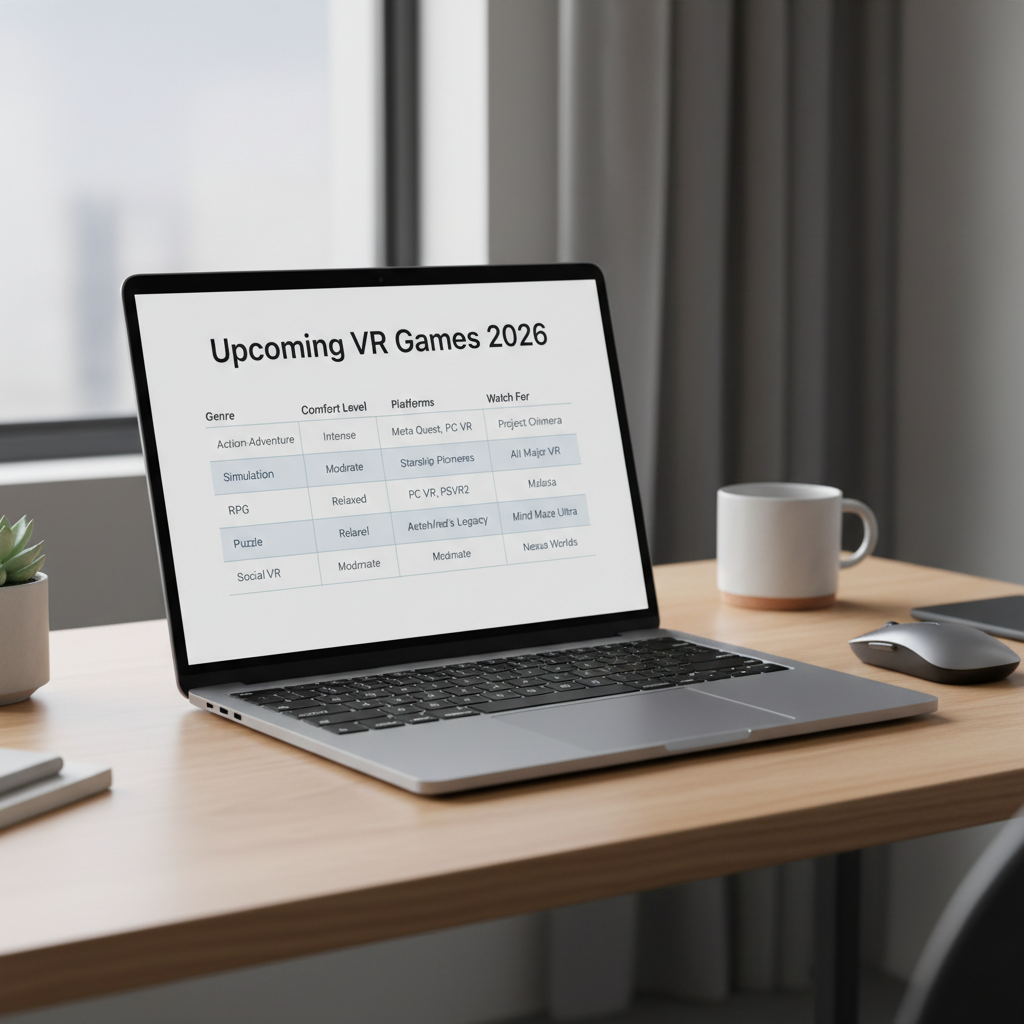
Use the table below as a template. The goal is not to “predict winners” with false certainty, it’s to sort announcements into decision-ready categories.
Quick comparison table (use this to organize your watchlist)
| Category | Why it tends to work in VR | Comfort risk | What to verify before buying |
|---|---|---|---|
| Story-driven action | Presence makes set pieces land, physical reloading and cover feel natural | Medium | Locomotion options, seated mode, performance targets |
| Co-op shooters | Social friction turns into fun, quick sessions fit VR habits | Medium–High | Netcode track record, cross-play, anti-cheat approach |
| Horror / survival | VR amplifies audio cues and spatial dread | Low–Medium | Comfort vignette, turning options, accessibility |
| Sim / cockpit | Seated play reduces nausea, depth helps reading instruments | Low | Control mapping, HOTAS support, UI legibility |
| Fitness rhythm / sports | Clear goals, short loops, strong replay value | Low | Tracking quality, safety boundaries, mod/community support |
How to evaluate a 2026 VR announcement without getting burned
When people ask for the best upcoming vr games 2026, what they usually want is confidence. You can’t get certainty, but you can reduce risk with a few checks that reflect how VR games succeed or fail.
- Interaction depth: Can you grab, store, and manipulate objects with consistent rules, or is everything “press A to do thing”?
- Comfort toolkit: Snap/smooth turning, teleport/stick locomotion, vignette, height calibration, left-hand support.
- Performance honesty: Does the team talk about frame rate targets and hardware, or only “immersive graphics”?
- Demo or vertical slice: Even a short demo tells you more than a year of dev logs.
- Platform clarity: PC VR, PS VR2, and standalone have different constraints, “all platforms” can hide compromises.
According to Meta (Quest safety and comfort guidance), comfort features and safe play space matter for a broad audience, so a studio that communicates these early often understands VR friction points.
Self-check: which 2026 VR games will you actually stick with?
This part is blunt on purpose. Most VR libraries look great until you realize your schedule, your tolerance for motion, and your setup reality dictate what you’ll keep launching after week two.
- Session length: Do you realistically play 15–25 minutes or 60–90 minutes?
- Motion comfort: Smooth locomotion feels fine, or it still makes you uneasy?
- Play space: Standing room-scale, or mostly seated in a tighter area?
- Social energy: Do you want matchmaking, or do you avoid voice chat?
- Content appetite: Do you need progression and loot, or do you prefer “great mechanics, endless runs”?
If you’re sensitive to motion sickness, lean toward seated, cockpit, puzzle, rhythm, and teleport-friendly titles. If you’re chasing multiplayer shooters, plan for a higher comfort ramp and be picky about settings.
Action plan: building a watchlist that pays off in 2026
A solid watchlist is less about collecting names and more about setting triggers, so you know when to revisit a game and when to ignore another “we’re excited to share” post.
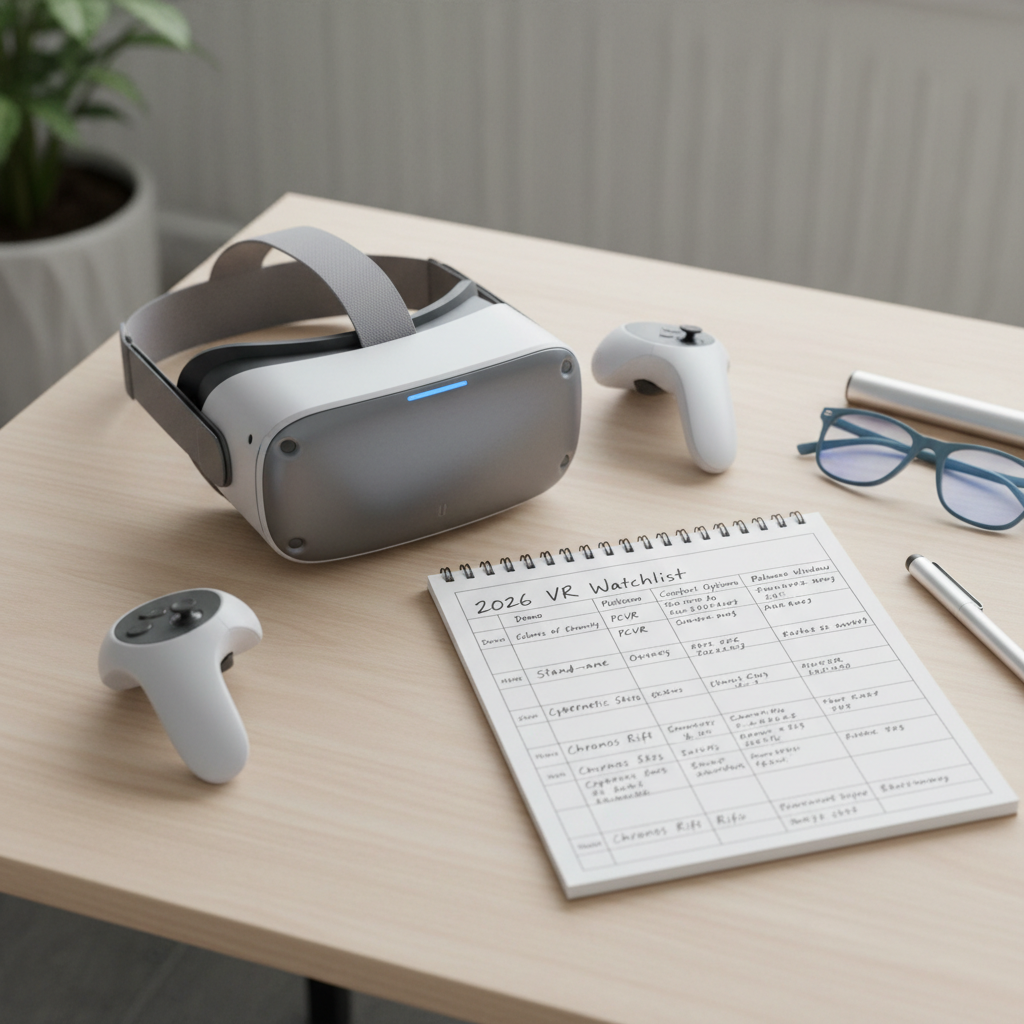
Here’s a simple approach that works even if release windows move.
- Create three tiers: “Day-one,” “Wait for reviews,” “Only on sale.” You’ll buy fewer regrets.
- Add one note per game: the one thing you must verify, like cross-play, seated mode, or mod support.
- Follow the right signals: demo availability, comfort settings list, platform certification announcements, performance patch notes.
- Set a quarterly check: once every few months is enough, VR news cycles are loud and repetitive.
Common mistakes when shopping for the best upcoming VR games 2026
Most “bad buys” aren’t because a game is terrible, they’re because it mismatches your hardware, comfort, or expectations.
- Buying on trailer vibes: VR feel comes from interaction and frame stability, not cinematic pacing.
- Ignoring comfort labels: if a store lists intense movement, take it seriously, especially for longer sessions.
- Assuming cross-buy or cross-play: many games don’t include it, and it changes where you should purchase.
- Over-upgrading early: a headset upgrade for one unconfirmed 2026 title can backfire if it slips or changes scope.
Key takeaways: build a tiered watchlist, verify comfort and platforms, and treat “2026” as a window until demos and store pages get specific.
When to seek extra guidance (comfort, safety, and setup)
If VR consistently causes nausea, headaches, or eye strain, it’s worth slowing down rather than forcing exposure. Many people improve with shorter sessions, better fit, and comfort settings, but if symptoms persist, consider talking with a medical professional for personalized advice.
For physical safety, follow your platform’s play-area guidance, clear obstacles, and use wrist straps. According to Meta, setting a boundary and taking breaks are basic steps that reduce accidents during active VR play.
Wrap-up: a smarter way to track what’s next
Chasing the best upcoming vr games 2026 works better when you treat it like planning, not prediction. Put each announcement into a category, verify comfort and platform details, then wait for the first real gameplay proof point.
If you want one next step, build a three-tier watchlist today, and add a single “must confirm” note to each game. That small habit keeps your 2026 VR spending focused, and your playtime higher than your backlog.